If you are shopping for an equestrian property in Santa Ynez, it is easy to fall for the barn, the views, or the charm of a country estate. But a horse property has to do more than look the part. You need to know whether the land, access, water, drainage, and improvements can support daily horse use without expensive surprises. That is especially important in Santa Ynez, where county rules shape much of the due diligence process. Let’s dive in.
Why county review matters in Santa Ynez
Santa Ynez is part of an unincorporated Santa Barbara County planning area, which means buyers are generally dealing with county-level planning, building, environmental health, and fire review rather than city rules. That matters because the questions you ask about a horse property often go beyond finishes and square footage.
For many buyers, the first issue is whether the parcel and improvements support the use you have in mind. County resources can help you verify zoning, parcel maps, permit history, and older lot configurations before you get too far into a transaction. On an older ranch or horse property, that early review can save time and help you avoid assumptions.
County land-division findings also tie buildability and development to practical constraints such as water, sewage, legal access, slope, agricultural viability, habitat, and hazard conditions. In other words, a beautiful setting is only part of the equation. You also need to know how the site functions on paper and on the ground.
Start with horse functionality
A strong equestrian property should support horses through all seasons, not just during a polished showing day. UC ANR guidance points to a practical baseline: stalls or pens, shelter or shade, clean accessible water, manure storage or composting, and forage and hay storage.
If horses will spend time in confined areas, turnout or controlled exercise also matters. So does the condition of those spaces over time. Mud, manure buildup, and limited circulation can turn a property that looks appealing in summer into a difficult setup during wetter months.
When you tour a property, try to picture daily routines instead of just visual appeal. Ask yourself whether the site makes feeding, turnout, cleaning, trailer use, and storage feel workable every day.
Barns and storage basics
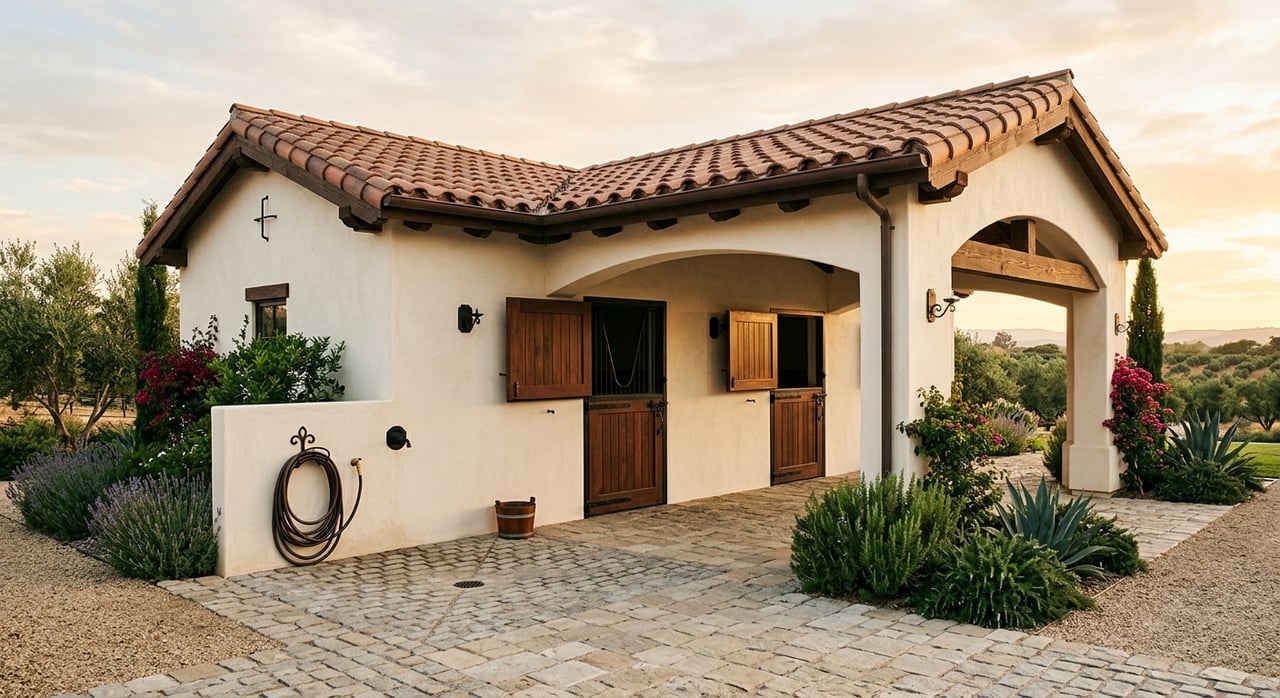
Barn layout should support safe movement, feed storage, and maintenance. Hay storage, manure handling, and shelter often sound like secondary details, but they directly affect the usability of the property.
You should also look for signs that the setup works year-round. A property with attractive structures but weak storage or poor manure management may require more updates than expected.
Turnout and exercise space
Turnout space is not just a bonus feature. It is part of the basic functionality of many horse properties, especially where horses spend time in stalls or pens.
As you evaluate paddocks or turnout areas, think about footing, drainage, and circulation. A space that becomes muddy or hard to manage after rain can add labor, maintenance cost, and stress for both horses and owners.
Drainage can make or break a horse property
In Santa Ynez, drainage deserves close attention. UC ANR horse-property guidance stresses that soil, slope, rainfall, drainage patterns, and changes to natural runoff all affect erosion and long-term site performance.
This is why experienced buyers look past surface beauty. A flat-looking paddock or arena may still have drainage issues that affect footing, runoff, and maintenance.
Facilities are generally better positioned away from creeks, floodplains, and steep slopes, with clean runoff directed away from manure areas and other high-use zones. Vegetation and filter strips can also play a role in managing runoff and reducing erosion.
Arenas and paddocks
Arena quality is about more than size. Proper footing and drainage matter for usability, maintenance, and the long-term condition of the riding surface.
UC ANR notes that arena edges may need kickboards or similar perimeter features to keep footing in place. Paddocks and other high-use areas also benefit from drainage planning that reduces standing water and mud.
Roads and parking areas
Roads, turnout areas, and parking spaces can become problem spots if drainage is poor. Water pooling in these areas can affect trailer movement, create mud, and increase wear on the property.
When you walk a site, pay attention to low points, runoff channels, ruts, and worn ground near gates or barn entries. Those clues often tell you how the property performs after weather changes.
Check trailer circulation and access
Horse properties need room to function safely, not just look spacious. You should confirm that trailers can enter, turn, load, and exit without awkward backing or tight choke points.
Access also matters for emergency response. Santa Barbara County Fire says access roads should maintain 10 feet of clearance on each side of the traveled section, overhead vegetation should be trimmed to 13 feet 6 inches, and gates should open inward and be wide enough for emergency equipment.
That makes driveway design and gate placement more important than many buyers realize. A property may feel private and attractive, but limited circulation or poor clearance can create real operational issues.
Water and septic deserve early attention
On rural and agricultural properties, water and septic should move to the top of your due diligence list. County land-division rules require adequate water resources, an approved well or shared water system, and septic and percolation approval for private sewage systems where applicable.
Santa Barbara County Environmental Health identifies OWTS as the septic system used where there is no public sewer. The County also oversees water quality protections for small public and private water systems.
For equestrian buyers, that means water capacity, reliability, and quality are not minor details. If you plan to support horses, irrigation, wash areas, or broader fire-preparedness needs, the water setup has to match the property’s real use.
Ask practical water questions
As you evaluate a property, focus on how water supports the full operation of the site. The right question is not simply whether there is a well, but whether the water system is adequate for the way you plan to use the property.
A beautiful ranch setting can still come with limitations if the system is stretched by irrigation, animal care, or other demands. This is one of the areas where early professional review can be especially helpful.
Verify parcel legality and permit history
Before you write an offer on a Santa Ynez equestrian property, verify that the parcel is legally created and that key improvements align with county records. Santa Barbara County property tools can help you review zoning, parcel maps, and permit history by parcel.
If parcel legality is uncertain, the County Surveyor’s Certificate of Compliance process is the correct next step. The County states that a certificate can confirm that land may be legally sold, leased, or financed, but it does not guarantee that the parcel is buildable.
That distinction matters. A parcel may be legal to transfer and still have separate limitations tied to water, septic, access, slope, hazards, or other county findings.
Lot changes need extra review
If you are considering future lot-line changes or acreage reconfiguration, county rules can add another layer of review. That is especially true where agricultural preserve protections apply.
In those situations, buyers should not assume that a future adjustment will be simple. The County’s standards are designed to preserve agricultural use and review changes carefully.
Wildfire readiness is part of the buying decision
Wildfire resilience is an important part of evaluating many Santa Ynez properties. Santa Barbara County Fire states that when a property in a high, very high, or County-defined fire hazard severity zone is sold, a compliant defensible-space inspection document is required.
The report should show an inspection completed within six months before the sales contract. If the property does not pass, the seller and buyer may use a written agreement to complete compliance within one year after closing escrow.
During inspection, the County may review vegetation, construction materials, access, address visibility, water supply, and other fire hazards. That means wildfire readiness is not only about brush clearance. It can also involve how the property is built, signed, and accessed.
Defensible space and barn safety
Santa Barbara County Fire calls for defensible space of 100 feet or to the property line, whichever is closer, and notes that more protection may be required in high-danger areas. Visible address numbers, access-road clearance, and hardening of vulnerable building components also matter.
Barns and agricultural structures deserve their own review. UC ANR notes that barns are vulnerable to embers and recommends clearing combustible material within the first 5 feet of barn walls and openings, while trailer areas should be kept free of wood, trash, brush, and weeds.
Do not assume trail access
Many buyers want a property that supports both horse keeping and riding access. In Santa Ynez, that is worth verifying separately.
If you are counting on nearby public riding opportunities, confirm trail designation and parking with the land manager rather than assuming access comes with the parcel. The Santa Barbara Ranger District in Los Padres National Forest includes horse riding and horse camping opportunities in the Lower Santa Ynez Recreation area, but public trail use is still something you should verify directly.
A smart buyer’s pre-offer checklist
Before making an offer, it helps to step back and test the property against daily use and county review.
Here are some of the most important questions to answer:
- Does the property function well in wet weather, not just in summer conditions?
- Is there enough room for turnout, manure handling, hay storage, and trailer circulation?
- Is the parcel legally created, and do zoning and permit records support the intended use?
- Is there a reliable water and septic plan for horses and the broader property?
- Are fire access, defensible space, and barn safety issues manageable?
- If you want off-site riding, has public trail access actually been confirmed?
Why professional coordination matters
On Santa Ynez equestrian properties, drainage, runoff, septic, water, access, parcel validity, and wildfire compliance often overlap. That is why buyers may need input from Santa Barbara County departments such as the Surveyor, Environmental Health, and Fire Prevention, along with a horse-facility or drainage professional.
This kind of property can offer an exceptional lifestyle, but it rewards careful planning. A disciplined review helps you understand whether the site can support horses comfortably and legally without major unplanned work after closing.
If you are considering a Santa Ynez horse property, it helps to work with an advisor who understands both the appeal and the practical details. Wade Koch brings a calm, process-driven approach to evaluating country properties in the Santa Ynez Valley, helping you move forward with clarity and confidence.
FAQs
What should buyers check first on a Santa Ynez equestrian property?
- Start with parcel legality, zoning, permit history, water, septic, access, drainage, and whether the setup truly supports horse use year-round.
Why is drainage so important on a Santa Ynez horse property?
- Drainage affects footing, erosion, mud, runoff, maintenance costs, and the long-term usability of arenas, paddocks, stalls, and access areas.
How do buyers verify parcel legality in Santa Ynez?
- Buyers can review county zoning and parcel tools first, and if legality is uncertain, the County Surveyor’s Certificate of Compliance process is the formal verification step.
What water and septic issues matter for Santa Ynez equestrian buyers?
- Buyers should confirm adequate water resources, the status of the well or shared water system, and septic or percolation approval where private sewage service applies.
Are wildfire inspections required when buying property in Santa Ynez?
- If the property is in a high, very high, or County-defined fire hazard severity zone, Santa Barbara County Fire requires a compliant defensible-space inspection document as part of the sale process.
Does buying a Santa Ynez horse property include trail access?
- No, buyers should verify public riding access, trail designation, and parking separately with the relevant land manager rather than assuming those rights come with the property.