Pricing a Santa Ynez country estate is not like pricing a suburban home. Acreage, water, equestrian facilities, and privacy can shift value more than bedroom count or square footage. If you want a premium result, you need a method tailored to the Valley’s unique properties. In this guide, you’ll learn what truly drives value, how to build bespoke comparables, which documents to assemble, and which pricing strategies deliver the best outcomes. Let’s dive in.
What drives value in Santa Ynez estates
Location and access
Proximity to town centers like Santa Ynez, Solvang, and Los Olivos can influence your buyer pool. Closer-in estates attract lifestyle buyers who want quick access to dining, wineries, and services. More remote parcels appeal to privacy seekers and working ranch owners. Road quality and maintenance also matter. Paved access, manageable grades, and clear road maintenance agreements increase confidence for buyers and appraisers.
Usable acres and topography
Total acres rarely tell the full story. Usable acres carry more value than steep or unbuildable slopes. Pasture, fenced areas, arable land, and gentle topography command stronger pricing than raw hillside. Soil and drainage are part of the picture. If your land supports vineyards, orchards, or grazing, that utility can bolster value where economically viable.
Water and rights
Water supply is a primary constraint in Santa Barbara County. Buyers and appraisers look for well logs, pump tests, water quality, and any municipal connections. In the Santa Ynez Valley groundwater basin, long-term availability and regulatory context matter. Identify and document any surface water rights, irrigation access, or historical water agreements early. Reliable water can materially shift usable acreage and price.
Equestrian infrastructure
Horse-ready estates can command a premium when the setup is complete and permitted. Valued features include stall count and quality, arena dimensions and footing, round pens, hotwalkers, wash racks, tack rooms, paddocks, cross-fencing, hay barns, and access to local veterinarians. Layout and biosecurity also matter. Functional circulation, quarantine options, and proper manure management improve usability and value.
Outbuildings and permitted uses
Guest units, barns, carriage houses, shops, and ADUs add value when they are permitted, well-built, and tied into approved utilities. Septic capacity and the permitted bedroom count for habitable structures are key. Agricultural buildings that support commercial activity can also increase value if compliant with zoning and county rules.
Views and privacy
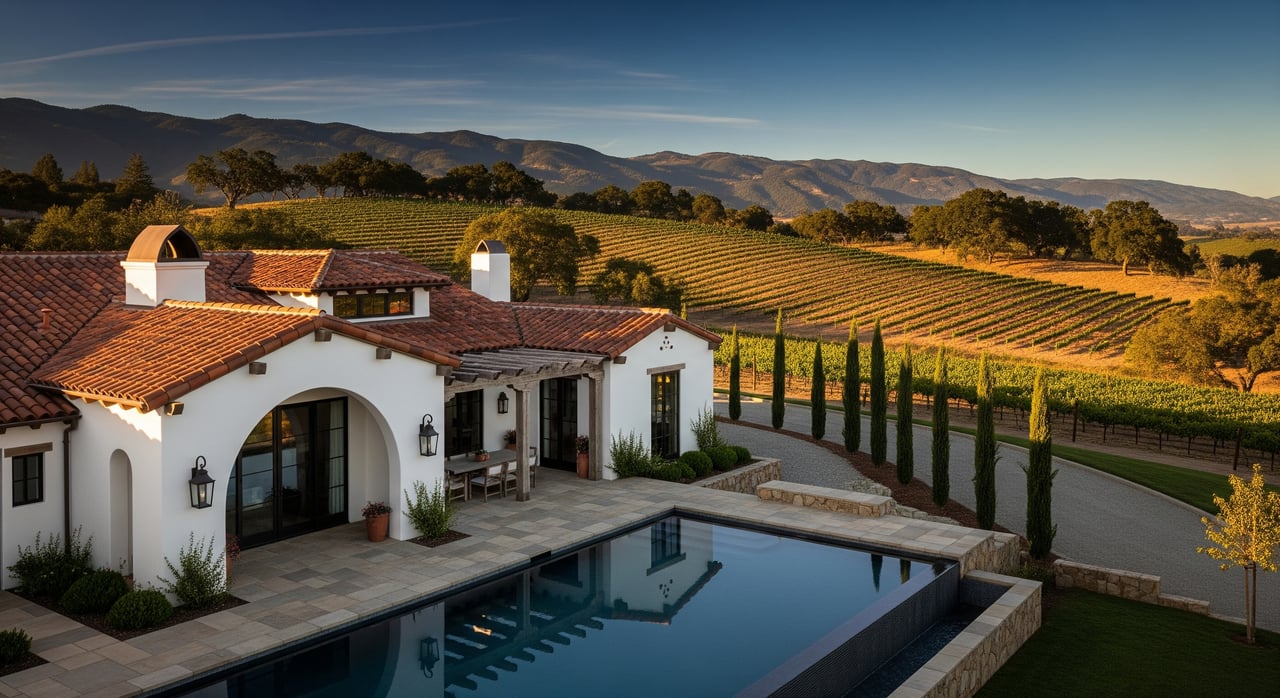
Sweeping views of the Santa Ynez Mountains, valley floor, or vineyards contribute to desirability. Privacy features such as long sightlines, screening, and gated entries attract high-privacy buyers. A view or privacy premium must still be supported by comparable sales, so document what sets your setting apart.
Wildfire risk and defensible space
The region carries elevated wildfire risk. Buyers and insurers want to see defensible space, hardening measures like Class A roofing and ember-resistant vents, and any recent mitigation work. Properties in higher hazard zones may face higher insurance costs, but documented mitigation can restore buyer confidence and protect value.
Zoning, encumbrances, and contracts
Zoning, minimum parcel size, and permitted uses shape highest-and-best use. Conservation easements and deed restrictions limit development flexibility and affect buyer expectations. Williamson Act contracts can reduce property taxes for agricultural uses but include transfer considerations. Always verify and disclose these items.
Utilities and broadband
Power, propane, septic or sewer, and broadband reliability influence marketability. Remote workers often weigh internet options heavily. If service is limited, be ready to set expectations and price accordingly.
Market timing and supply
Luxury inventory in the Valley is often limited. Seasonality and interest rates affect buyer urgency and time on market. This backdrop can inform how assertively you price and whether to consider targeted or off-market strategies.
Build a price with bespoke comps
Start with sales comparison
The sales comparison approach is standard, but true apples-to-apples sales can be rare. Prioritize location, usable acreage, water reliability, view and privacy, and the quality of improvements. When close matches are limited, adjust carefully and document the reason and basis for each adjustment.
Use component-based adjustments
Break the property into components: land value based on usable acres, the main residence, guest units, barns and arenas, irrigated pasture, and specialized infrastructure. Adjust each piece rather than relying on a simple per-acre figure. Support adjustments with replacement costs and premiums observed in other relevant sales.
Add cost and income cross-checks
For unique or newer improvements, the cost approach helps. Estimate the replacement cost of major structures, subtract depreciation, and add land value. If your estate has consistent agricultural or equestrian income, use the income approach as a secondary check. For lifestyle estates without steady income, it is usually less applicable.
Expand radius and time, then adjust
Start with Santa Ynez Valley sales and expand to similar rural foothill areas when necessary, focusing on comparable access and elevation. Apply time adjustments if comps are more than three to six months old, and justify view, facility quality, and water-related differences with clear notes.
Bring in specialists when warranted
- Agricultural or equine appraisers for complex horse or ag operations.
- Civil engineers or water consultants to validate wells, pumping capacity, and drainage.
- Fire-hardening consultants and insurance brokers to assess insurability and document mitigation.
- Land planners or surveyors for easements, lot lines, and buildable areas.
- Environmental consultants for conservation easements, wetlands, or habitat constraints.
Pre-listing due diligence that pays off
Assemble a documentation packet
Serious buyers and appraisers reward organized, verified information. Gather:
- Recent survey or plot map with boundaries, structures, and easements.
- Preliminary title report showing encumbrances and restrictions.
- Building permits and final sign-offs for the home, barns, guest units, ADUs, and arenas.
- Well logs, pump test results, and water quality reports; any water rights or irrigation agreements.
- Septic permits and capacity records, including the bedroom count supported by the system.
- Property condition and pest reports; maintenance records for major systems.
- Fire-hardening and defensible space documentation, including any mitigation program details.
- Road maintenance or HOA agreements and fee details if applicable.
- Agricultural leases and P&L statements if the property operates as a business.
Address issues before going live
- Bring unpermitted space into permitted status when feasible. Unpermitted habitable area often harms value and financing.
- Tackle visible deferred maintenance such as roofing, fencing, and arena footing.
- Complete defensible-space work and keep records to improve insurability and buyer confidence.
- Order a current well flow test if water is a major selling point.
Pricing strategy for premium outcomes
List at supported market value
A price supported by recent comps and thorough documentation attracts qualified buyers and improves appraisal outcomes. It also shortens days on market and reduces negotiation friction.
Test the market with intention
Some unique, high-end estates warrant pricing slightly above market to gauge demand. This can work when inventory is thin and your property has distinctive, well-documented features. The risk is longer market time, so align expectations and timelines before you choose this path.
Consider targeted or off-market options
Confidential or targeted listings can reach specific buyer segments such as equestrian professionals or vineyard investors. This strategy trades broad exposure for precision and privacy. You may reduce the chance of competitive bidding unless your outreach is well-matched to the right audience.
Elevate presentation to support price
- High-quality aerials and site maps that highlight usable acres, trails, and circulation.
- Detailed floor plans and amenity lists for the home and outbuildings.
- Video tours that show access, barn operations, and scenic orientation.
- A professional documentation packet ready for serious buyers and appraisers.
- Broker previews to local networks that work with equestrian and agricultural clients.
Prepare for appraisal and negotiation
Expect larger adjustments for unique estates. Support your price with replacement-cost estimates, component valuation summaries, and detailed improvement lists. If appraisal gaps arise, credits for mitigation items or documented contracts for improvements can help bridge the difference. Be mindful that some lenders underwrite rural properties differently, so jumbo loans and cash may be more common.
The per-acre myth
Per-acre pricing alone can be misleading. A hillside acre without water or access is not equal to an irrigated acre with fencing and power nearby. Use per-acre figures only as a cross-check. A component-based valuation that separates land value by usability and adds improvements produces a more accurate and defensible price.
A simple plan to set your price
- Assess what you have. Inventory usable acres, water systems, barns, guest units, views, privacy, and wildfire mitigation.
- Verify what is permitted. Pull building and septic permits, plus well records and any water rights.
- Build bespoke comps. Expand radius and time as needed, then make component-based adjustments.
- Cross-check with costs and income. Use replacement costs for unique structures and income data where applicable.
- Fix friction points. Complete key repairs, defensible space, and permitting before listing.
- Choose a strategy. Decide between market-value pricing, a measured market test, or targeted/off-market exposure.
When you combine rigorous documentation with a tailored pricing strategy, you position your estate for a smoother sale and a stronger result.
Ready to discuss your property in detail and map out a disciplined plan? Connect with Wade Koch for a confidential consultation, a bespoke valuation framework, and boutique marketing designed for premium outcomes.
FAQs
How do I value equestrian facilities in Santa Ynez?
- Focus on quality, completeness, and permits. Document stall counts, arena specs and footing, support spaces, and any income history. Complex setups benefit from an equine appraiser.
How important are water reports for pricing?
- Critical. Provide well logs, pump tests, water quality, and any irrigation or surface rights; water reliability directly affects usable acreage and buyer confidence.
What if my barns or guest unit are unpermitted?
- Unpermitted habitable space often reduces value and limits financing; bringing structures into compliance before listing typically supports a higher price.
Does wildfire risk reduce what buyers will pay?
- Elevated risk can narrow the buyer pool, but documented hardening and defensible space improve insurability and can help preserve value.
How do easements, zoning, or the Williamson Act affect price?
- They shape what you can do with the land and may influence taxes and buyer flexibility; verify and disclose details so pricing reflects true highest-and-best use.
What do appraisers rely on most for unique estates?
- Recent comparable sales, verified permits and final sign-offs, replacement-cost data for unique structures, and income records if the property operates commercially.